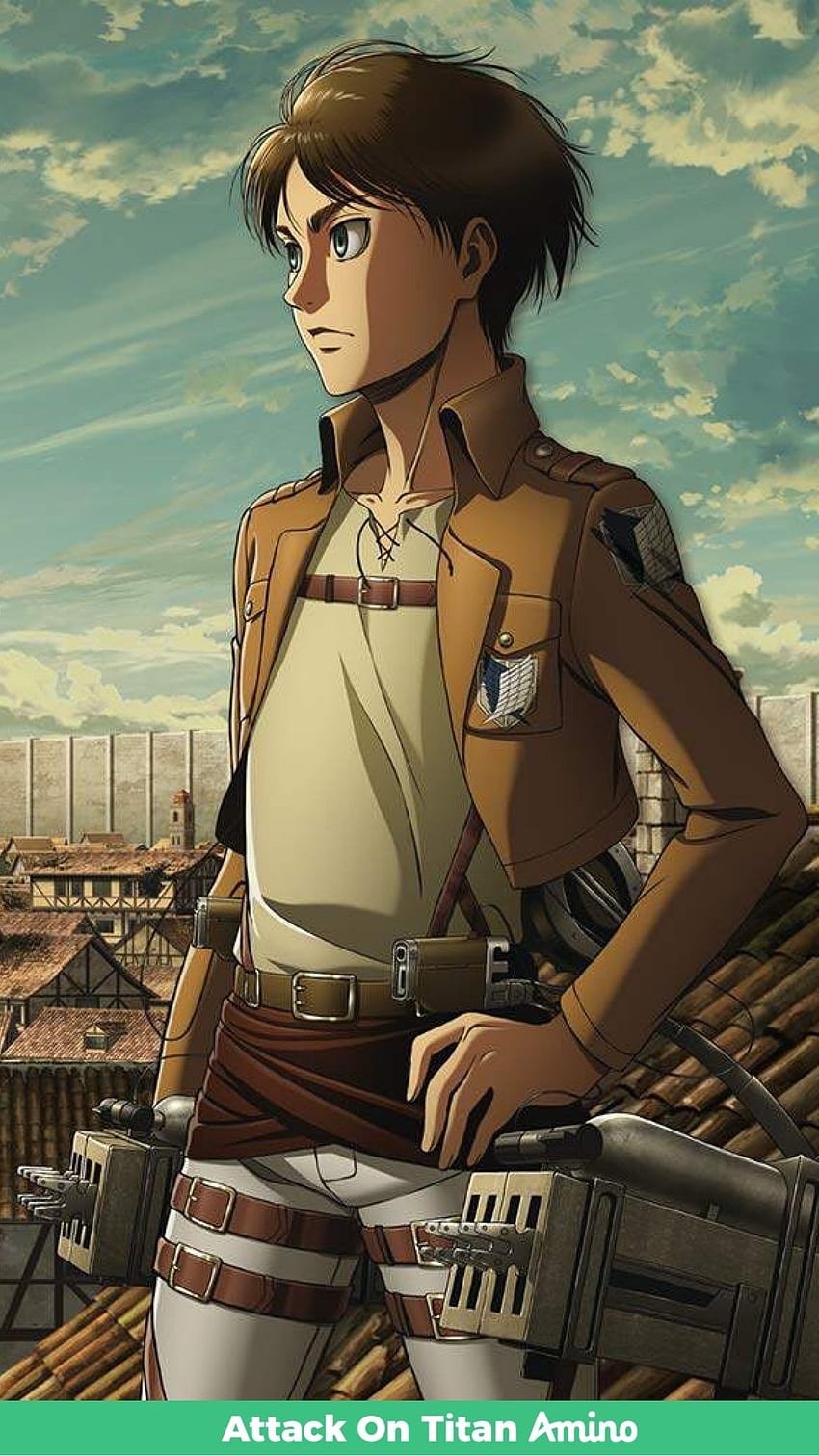
The world of anime is no stranger to epic finales, but few spark as much fervent debate as the conclusions of Attack on Titan and Code Geass. While Attack on Titan's ending left a significant portion of its fanbase feeling... well, conflicted, Code Geass, which wrapped up way back in 2008, is still championed as a masterclass in narrative closure, often lauded as a superior version of what Attack on Titan tried to achieve. It’s a fascinating comparison that goes beyond mere plot points, delving deep into character consistency, authorial intent, and the sheer power of a well-executed plan.
At the heart of this discussion lie two iconic anti-heroes: Eren Yeager and Lelouch vi Britannia. Both characters took on the monumental task of reshaping their worlds through extreme measures, believing their destructive paths were necessary for a greater, more peaceful future. Yet, their journeys diverged dramatically in their final acts, illustrating a profound difference in execution and impact. This hub will unpack why Lelouch's "Zero Requiem" soared, offering a blueprint for how Eren's "Rumbling" perhaps could have achieved a similar narrative triumph.
The Unending Echo of Endings: Why Narratives Matter
Every great story builds towards its conclusion, and the ending is often what solidifies its legacy. For Code Geass, its finale cemented its place in anime history. For Attack on Titan, its ending unfortunately tarnished some of its prior glory. The contrast isn't just about whether fans liked it, but about how well the ending aligned with the established narrative, character arcs, and thematic promises. If you've ever wondered , you're not alone, and exploring this forms a crucial backdrop to our comparison.
Lelouch's Masterpiece: The Unflinching Resolve of Zero Requiem
Lelouch's journey began with a simple, yet powerful, motivation: to create a gentle world for his beloved sister, Nunnally. Empowered by Geass, he transformed from a disillusioned prince into the revolutionary leader Zero, an anti-hero who committed countless atrocities, each framed as a "necessary evil." His master plan, the "Zero Requiem," wasn't just a plot device; it was the culmination of his entire character arc. Lelouch deliberately positioned himself as the world's ultimate villain, uniting humanity against a common enemy – himself – only to then sacrifice his own life, purging the world of hatred and ushering in an era of peace.
What made Zero Requiem perfect was its unwavering commitment. Lelouch never wavered, never doubted his path, and fully embraced the role of the absolute evil, taking all the world's hatred onto his shoulders. This unwavering resolve, his complete assumption of responsibility, is a cornerstone of why his ending is celebrated. To truly grasp the genius behind it, .
Eren's Burden: The Rumbling's Unsteady Execution
Eren Yeager, much like Lelouch, sought to achieve a form of freedom and protect his loved ones. He gained immense power and initiated the "Rumbling," a cataclysmic event meant to pave the way for a new world. However, where Lelouch's transformation was resolute, Eren's was fraught with internal conflict. After acquiring his powers, Eren's determination felt inconsistent; he frequently reverted to his old, hesitant, even tearful self. This made his monstrous actions feel less like a calculated, necessary evil and more like the desperate acts of a conflicted young man.
The explanation for the Rumbling, particularly Eren's conversation with Armin, felt rushed and, for many, unsatisfying. Unlike Lelouch, who fully owned his villainy, Eren's ending seemed to offer him a degree of redemption, with Armin appearing to shoulder some of his burden. This blurred his role as the absolute villain, weakening the impact of his sacrifice. To understand the stark differences, .
The Core of Consistency: Character Arcs and Unwavering Commitment
The primary distinction between these two anti-heroes lies in their character consistency and unwavering commitment to their chosen paths. Lelouch, once he committed to Zero Requiem, never looked back. His actions, no matter how morally ambiguous, flowed logically from his established character and grand design. Eren, on the other hand, frequently seemed at odds with his own monstrous deeds, displaying a vulnerability that, while humanizing, undermined his narrative as a world-destroying force. .
This extends to how they bore the weight of their choices. Lelouch fully embraced the world's hatred, becoming the devil so humanity could find unity. His sacrifice was complete, leaving no room for ambiguity about his role as the ultimate scapegoat. Eren's narrative, however, allowed for a shared guilt, diminishing the singular impact of his actions and his ultimate fate. .
The Verdict: Why Code Geass Remains the Benchmark
Code Geass succeeded where Attack on Titan faltered primarily due to its unflinching commitment to its narrative and character arcs. The "Zero Requiem" wasn't just an ending; it was the inevitable, perfectly orchestrated conclusion that honored Lelouch's journey from start to finish. It provided a clear, satisfying, and thematically consistent resolution that resonated deeply with audiences. The narrative coherence, the resolute characterization, and the poignant, self-sacrificial final act are all reasons .
This isn't to say Attack on Titan is without merit, but in the critical lens of narrative conclusion, it missed the mark that Code Geass hit so perfectly. Imagining offers a fascinating thought experiment, highlighting the crucial elements that make an ending truly legendary.
The enduring discussion surrounding Eren Yeager and Lelouch vi Britannia isn't just about personal preferences; it's a vital lesson in storytelling. It teaches us that an anti-hero's journey, especially one involving world-altering decisions, requires an ending that is both bold and consistent, where the character fully embodies their chosen role, for better or for worse. The legacy of Code Geass stands as a testament to this principle, a benchmark for how to craft a truly unforgettable finale that binds an entire narrative together with grace and power.